

Executive Summary: Family Law Procedure in Pakistan Outside Court
What This Service Covers
This page covers the non-litigation side of family law procedure in Pakistan: talaq and delegated divorce notices, Arbitration Council proceedings, polygamy permission, Nikah registration, NADRA marriage and divorce certificates, and updating family records. Court cases sit outside this family law procedure in Pakistan and are covered on our litigation pages.
Who Needs It
Husbands giving talaq, wives exercising a delegated right of divorce, couples separating by agreement, wives who have obtained a khula decree and couples whose Nikah was never registered all rely on this family law procedure in Pakistan. Overseas Pakistanis often need it to update records from abroad.
How Fees Are Quoted
Fees for family law procedure in Pakistan are quoted after the documents are reviewed, because the work differs between drafting a single notice and managing a complete Union Council file. The basis for a first meeting is explained on our consultation fees page, and a written quote follows.
Usual Time Frames
A talaq notice cannot take effect for at least 90 days after the Chairman receives it, and longer if the wife is pregnant. Certificates then depend on the Union Council and NADRA system. Any family law procedure in Pakistan should be planned with a margin, never a guaranteed date.
How to Start
Message +92 333 1127834 on WhatsApp with photographs of the Nikah Nama, both CNICs and any notice already sent or received. An advocate confirms which Union Council has jurisdiction and which family law procedure in Pakistan applies to your situation.
Advocate-Led Since 1985
Family Lawyers Pakistan is part of Qanoon Group, advocate-led since 1985, with about 17 advocates. Our Karachi, Lahore and Islamabad teams handle family law procedure in Pakistan daily, including the Union Council files that follow khula decrees and overseas talaq notices.
The Talaq Notice Under the Muslim Family Laws Ordinance 1961
The central rule of family law procedure in Pakistan for talaq is in the Muslim Family Laws Ordinance 1961. A husband who pronounces talaq must, as soon as may be afterwards, give written notice to the Chairman of the Union Council and supply a copy to his wife. Failing to give notice is an offence under the Ordinance.
The notice should identify both spouses, the date of the Nikah and the date of pronouncement, and should be delivered in a way that can be proved, such as registered post or by hand against receipt. Proof of delivery matters throughout family law procedure in Pakistan. Our guide to the talaq notice in Pakistan sets out a compliant format.
Which Union Council Has Jurisdiction
Under the rules made under the Ordinance, the notice ordinarily goes to the Union Council of the area where the wife was residing when talaq was pronounced. Sending it to the wrong Union Council is a common error in family law procedure in Pakistan and can delay the effective date considerably.
The Arbitration Council and the 90-Day Period in Family Law Procedure in Pakistan
Within 30 days of receiving the notice, the Chairman must constitute an Arbitration Council, made up of the Chairman and a representative of each spouse, to attempt reconciliation. Either spouse may attend with an advocate. Either may decline to reconcile, because this family law procedure in Pakistan cannot compel the marriage to continue.
The talaq takes effect only when 90 days have passed from the Chairman’s receipt of the notice, unless it is revoked earlier. If the wife is pregnant, it does not take effect until the 90 days or the pregnancy ends, whichever is later. This waiting period is the core safeguard of family law procedure in Pakistan.
Revocation and Remarriage
A husband may revoke the talaq before it becomes effective. After it becomes effective, the same couple may remarry without an intervening marriage unless this is the third such dissolution. Advice is wise before relying on either rule, because family law procedure in Pakistan and personal religious practice can raise different questions.
Delegated Divorce and Separation by Agreement
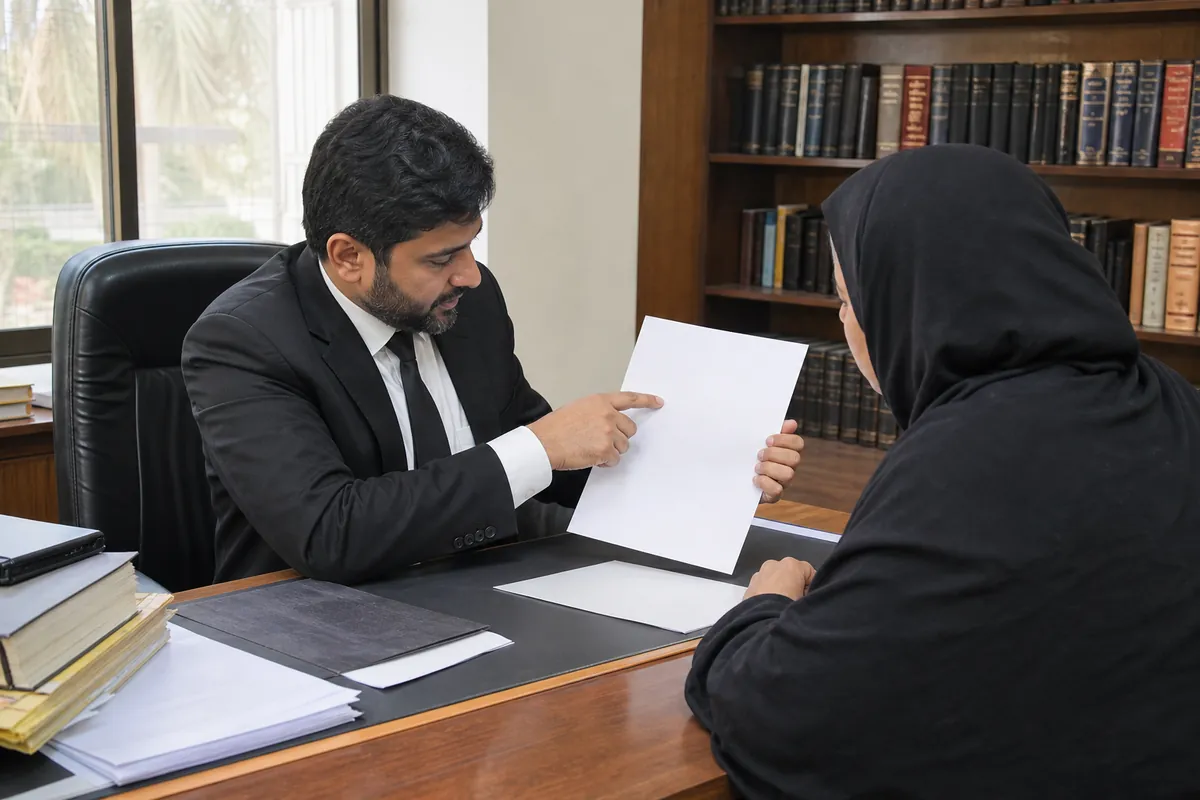
Where the Nikah Nama delegates the right of divorce to the wife, she exercises it by giving notice to the Chairman in the same way as a husband’s talaq. The same family law procedure in Pakistan applies where spouses separate by mutual agreement rather than through talaq.
Mutual separation still follows the full family law procedure in Pakistan: a written notice, an Arbitration Council and the 90-day period. Settlement terms on dower, maintenance and dowry articles should be recorded carefully before notice is given. Our page on mutual divorce in Pakistan explains how those terms are documented within family law procedure in Pakistan.
Certificates: Effectiveness of Talaq and the NADRA Divorce Certificate
When the 90 days have passed without reconciliation, the Union Council issues a certificate confirming that the talaq or dissolution has become effective. The NADRA divorce certificate is then generated by the Union Council through NADRA’s system. Processing time for this family law procedure in Pakistan varies between Union Councils, so no same-day issue should be promised.
The certificate is often needed for remarriage, for updating the CNIC marital status, for passports and for foreign immigration authorities. Completing this final step is the part of family law procedure in Pakistan that clients most often overlook, sometimes for years.
After a Khula Decree: The Union Council Step
A wife who obtains a khula or dissolution decree from the Family Court still has one administrative family law procedure in Pakistan to complete. The court sends a certified copy of the decree to the Chairman of the Union Council, which is treated as a notice of dissolution, and the dissolution becomes effective after the 90-day period runs.
The wife should follow up with the Union Council to obtain the certificate of effectiveness and the NADRA divorce certificate. How the court case itself is conducted, from plaint to decree, is explained in our guide to family court procedure in Pakistan; this page covers only the administrative family law procedure in Pakistan that follows.
Polygamy Permission: An Often Misunderstood Family Law Procedure in Pakistan
Under the Muslim Family Laws Ordinance 1961, a married man may not contract another marriage without the prior written permission of the Arbitration Council. Under this family law procedure in Pakistan he applies to the Chairman, stating his reasons and whether the existing wife or wives have consented, and each side nominates a representative.
In this family law procedure in Pakistan, the Arbitration Council may grant permission only if satisfied that the proposed marriage is necessary and just. A man who marries without permission must pay the existing wife’s entire dower immediately and commits an offence, and the existing wife may seek dissolution of her own marriage under the Dissolution of Muslim Marriages Act 1939.
Nikah Registration: Where Family Law Procedure in Pakistan Begins
Registration is the starting point of family law procedure in Pakistan for every marriage: each Muslim marriage must be registered under the Muslim Family Laws Ordinance 1961. Registration is done by a Nikah Registrar licensed by the Union Council, using the prescribed Nikah Nama, with copies for the Union Council and the spouses. Both parties must be adults, and in Sindh the law fixes the age at 18.
Failure to register does not by itself make a marriage void, but it is an offence and creates serious problems of proof later. Careful completion of the dower and delegated-divorce columns is part of sound family law procedure in Pakistan. See our guide to the Nikah Nama in Pakistan for each column explained.
NADRA Marriage Certificate and Updating Family Records
Once the Nikah is registered, the NADRA marriage certificate is issued by the Union Council through NADRA’s system. It is widely required for spouse visas, family registration and CNIC updates. Delays in this family law procedure in Pakistan usually arise from incomplete Nikah Nama entries or a Registrar who has not reported the marriage.
After marriage or divorce, each spouse should update the marital status on the CNIC and, where relevant, the Family Registration Certificate at NADRA. Keeping records consistent is the quiet final stage of family law procedure in Pakistan, and it prevents problems at airports and embassies later.
Documents Table for Family Law Procedure in Pakistan
The table below lists the main administrative steps, where each takes place and the documents usually required. Requirements vary between Union Councils, so treat it as a starting checklist for family law procedure in Pakistan rather than a complete list.
| Procedure | Where | Key documents | Usual time |
|---|---|---|---|
| Talaq or delegated divorce notice | Union Council | Written notice, Nikah Nama, CNICs, proof of delivery | At least 90 days |
| Arbitration Council | Union Council | Nomination of representatives | Within the 90 days |
| Certificate of effectiveness | Union Council | Notice record, proof of service | After 90 days, varies |
| NADRA divorce certificate | Union Council via NADRA | Certificate of effectiveness, CNICs | Varies by office |
| Polygamy permission | Union Council | Application with reasons, existing wife’s details | Varies |
| Nikah registration | Nikah Registrar and Union Council | Nikah Nama, CNICs, witnesses | Varies |
| NADRA marriage certificate | Union Council via NADRA | Registered Nikah Nama, CNICs | Varies by office |
Overseas Parties and Family Law Procedure in Pakistan
Overseas Pakistanis can complete most of this family law procedure in Pakistan without travelling. A talaq notice can be sent from abroad by a provable method, and a properly attested power of attorney allows a relative to attend the Union Council and collect certificates. Our overseas Pakistani family lawyers page explains the arrangements.
Recognition of a divorce obtained in a foreign court, and the effect of a Pakistani certificate abroad, raise separate questions that require specific legal advice. Our team reviews both the Pakistani and foreign documents before any family law procedure in Pakistan is started, so that records match in both countries.
Common Mistakes in Family Law Procedure in Pakistan
Most problems we see in family law procedure in Pakistan arise from a handful of avoidable errors. Each one can delay the effective date, invalidate a step or leave records inconsistent for years.
- Pronouncing talaq orally without sending written notice
- Sending the notice to the wrong Union Council
- Failing to send a copy of the notice to the wife
- Treating talaq as effective before the 90 days have run
- Leaving Nikah Nama dower columns blank or vague
- Remarrying before obtaining the certificate of effectiveness
- Never updating CNIC marital status at NADRA
- Assuming a foreign divorce completes family law procedure in Pakistan automatically


Family Law Procedure in Pakistan: Frequently Asked Questions
Does talaq take effect immediately when pronounced?
No. Under the Muslim Family Laws Ordinance 1961, talaq takes effect only 90 days after the Chairman of the Union Council receives written notice, or later if the wife is pregnant. This waiting period is a defining feature of family law procedure in Pakistan.
Which Union Council should receive the talaq notice?
Ordinarily the Union Council of the area where the wife was residing when talaq was pronounced. Choosing the correct office is one of the first checks in family law procedure in Pakistan, because a notice sent elsewhere may need to be redirected.
Is attending the Arbitration Council compulsory?
Each spouse is invited to nominate a representative and attend, but neither can be forced to reconcile. The Council’s purpose is reconciliation. Attending with advice is sensible, because the family law procedure in Pakistan continues whether or not a spouse participates.
How does a wife exercise a delegated right of divorce?
If the Nikah Nama delegates the right of divorce to her, she gives written notice to the Chairman in the same way as a husband’s talaq. The Arbitration Council and 90-day period then follow the same family law procedure in Pakistan.
What happens at the Union Council after a khula decree?
The Family Court sends a certified copy of the decree to the Chairman, which is treated as notice of dissolution. After 90 days the wife can obtain a certificate of effectiveness and a NADRA divorce certificate, completing the administrative family law procedure in Pakistan.
Can a husband marry again without his first wife’s consent?
He needs the prior written permission of the Arbitration Council, which considers whether the marriage is necessary and just and whether the existing wife consents. Marrying without permission carries penalties. This family law procedure in Pakistan exists to protect the existing wife.
Is an unregistered Nikah invalid?
Not automatically. Non-registration is an offence and creates serious proof problems, but it does not by itself void the marriage. Registration can sometimes be completed late through the Union Council, and our team can advise on that family law procedure in Pakistan.
How long does a NADRA marriage or divorce certificate take?
It depends on the Union Council and the completeness of the record. Some are issued quickly, others take longer. No reliable family law procedure in Pakistan can promise same-day issue, and any such promise should be treated with caution.
Can I complete these steps from abroad?
Usually yes. A notice can be sent from abroad by a provable method, and an attested power of attorney lets a relative deal with the Union Council. Recognition of foreign divorces, however, requires specific advice before relying on any family law procedure in Pakistan.
Do I need a lawyer for Union Council procedures?
It is not legally required, but errors in notices, service or jurisdiction are common and can delay the effective date. An advocate makes sure each family law procedure in Pakistan is completed correctly and that the final certificates are actually obtained.
Related Legal Services
These pages cover connected questions that often arise alongside family law procedure in pakistan.
Legal Framework Behind Family Law Procedure in Pakistan
The explanation above draws on the official framework listed here. Provincial amendments and the facts of each matter must still be checked before acting.
Publication and Legal Review
Reviewed by: Syed Akhtar Rizvi, Advocate Supreme Court.
Published by: Family Lawyers Pakistan, Qanoon Group.
Last updated: .
General guidance. The applicable law, local amendments and case record must be checked for your matter.