Inheritance, Succession, and Property Partition Laws in Pakistan
A Comprehensive Legal Overview by Family Lawyers & Attorneys
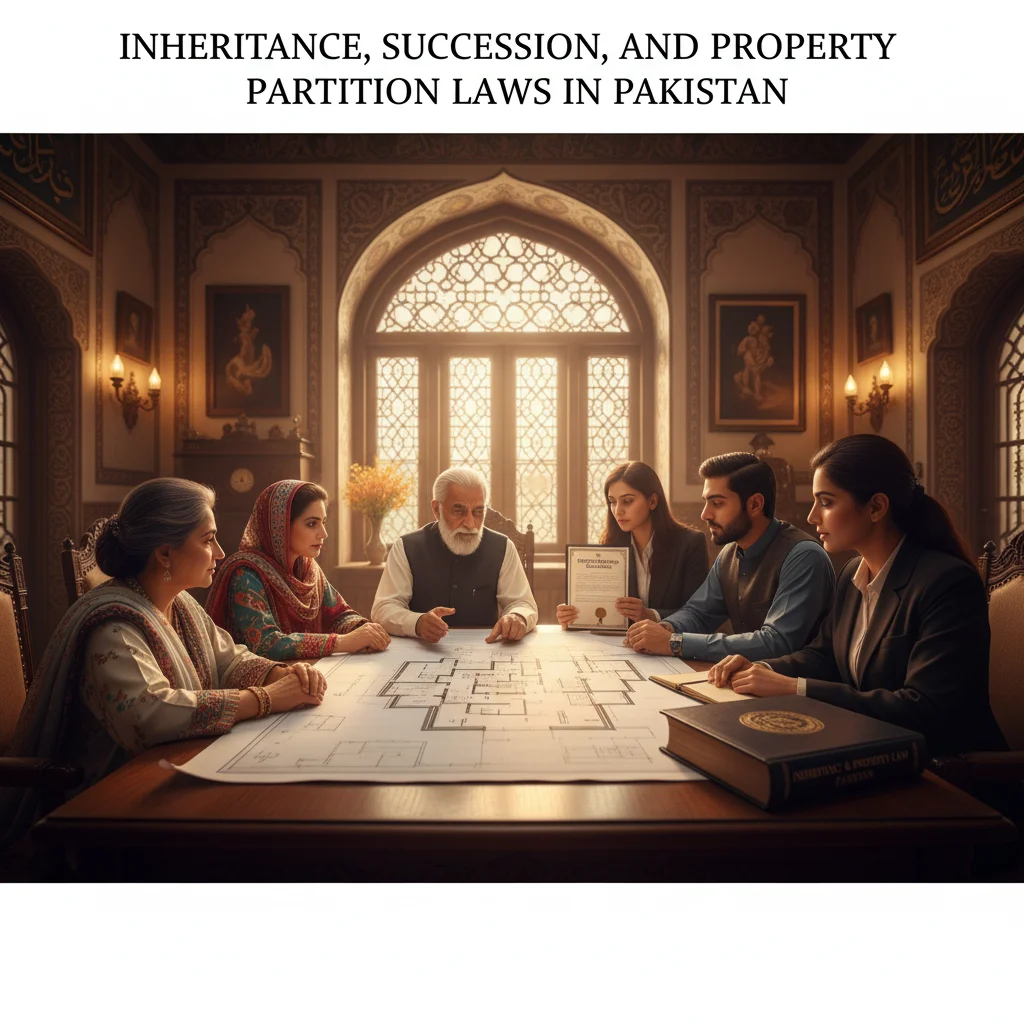
The question of how a deceased person’s property is divided among family members often gives rise to confusion and disputes. In Pakistan, this process is governed by a combination of Islamic Sharia principles and statutory laws, ensuring that the rights of legal heirs are protected according to both religion and law.
At Family Lawyers & Attorneys, we specialize in handling all legal aspects of succession, inheritance, and property partition cases across Pakistan, including assistance with NADRA-issued Succession Certificates and Letters of Administration.
Understanding Succession and Inheritance Law in Pakistan
Legal Framework Governing Inheritance
Inheritance matters in Pakistan are regulated by several key laws, depending on the religion of the deceased:
- For Muslims: The Muslim Family Laws Ordinance, 1961, and the West Pakistan Muslim Personal Law (Shariat) Application Act, 1962.
- For Non-Muslims: The Succession Act, 1925, which governs Christians, Hindus, and other minority communities.
- For Property Division: The Partition Act, 1893, and the Punjab Partition Act, 2012 (for faster proceedings in Punjab).
These legal frameworks ensure fair asset distribution among heirs while addressing issues related to both movable and immovable property.

Usefull Links
Civil Registration Certificates
Marriage /Nikah Services
Islamic Principles of Inheritance (Warasat)
In Pakistan, Muslims inherit property according to Islamic Sharia, which lays down a clear structure for the transfer of wealth after death. The system ensures that all rightful heirs — especially women, parents, and children — receive their due shares.
Essential Steps Before Distribution
Before an estate is divided among heirs, the following obligations must be met:
- Payment of Funeral Expenses
Burial and funeral costs are paid first from the estate. - Settlement of Debts and Obligations
Any outstanding loans, liabilities, or unpaid dower (Haq Mehr) must be cleared. - Execution of a Valid Will (Wasiyyat)
A will is valid only up to one-third of the estate, and cannot exclude any legal heir without their consent.
Only after these steps are completed does the actual distribution of inheritance begin.
Allocation of Shares Among Legal Heirs
Islamic inheritance laws define clear, predetermined shares for specific heirs — referred to as Quranic sharers (Ashab al-Faraid).
Common Distribution Rules:
- Widow: Receives one-fourth if there are no children; one-eighth if children exist.
- Widower: Receives one-half if no children; one-fourth if children exist.
- Parents: Each receives one-sixth when children are alive.
- Children: A male child inherits double the share of a female child, reflecting the principle that males bear greater financial obligations in Islamic law.
After the distribution of fixed shares, any remaining property is given to residuary heirs (Asaba), usually the closest male relatives.
Inheritance Rights of Orphaned Grandchildren
Under Section 4 of the Muslim Family Laws Ordinance, 1961, if a child of the deceased passes away before them, that deceased child’s children (grandchildren) are entitled to receive the same share their parents would have received. This provision ensures fairness and continuity across generations.
Succession Certificate and Letter of Administration
Why Are These Documents Required?
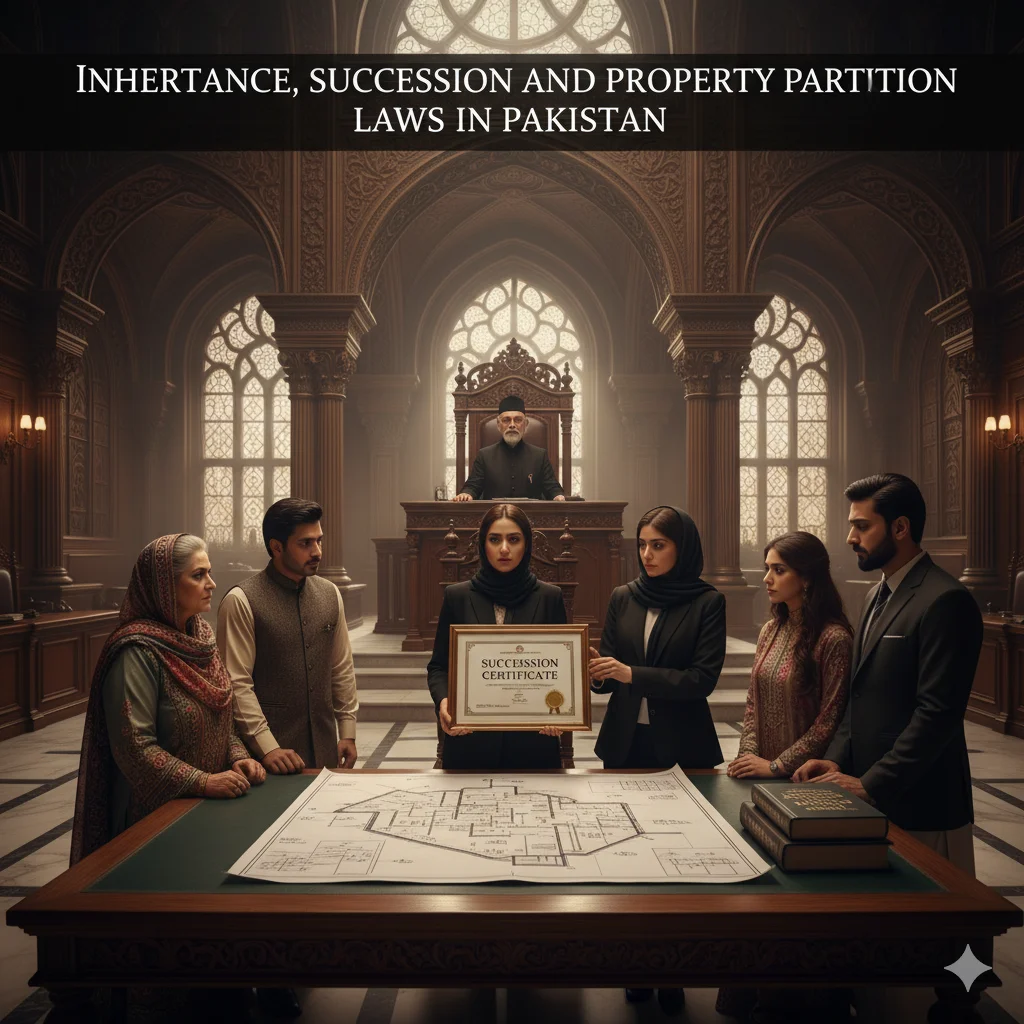
When a person dies leaving behind property or assets, their legal heirs cannot access or transfer ownership without official permission. This is granted through:
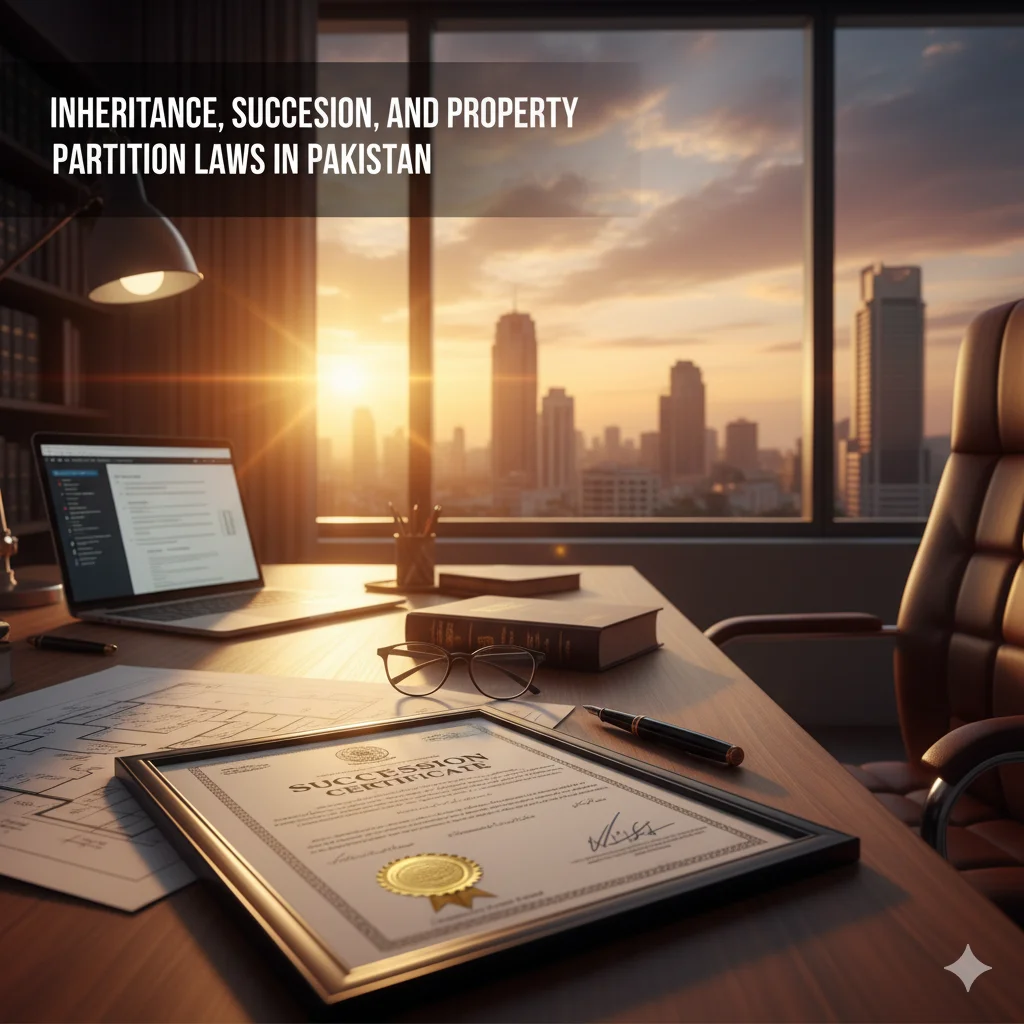
- A Succession Certificate for movable assets (such as bank accounts, pensions, and shares).
- A Letter of Administration for immovable assets (like houses, plots, or agricultural land).
These documents are essential for safeguarding the rights of heirs and preventing disputes or fraudulent transfers.
NADRA’s Digital Succession Process
In 2021, the National Database and Registration Authority (NADRA) introduced a digital system to simplify the issuance of Succession Certificates and Letters of Administration. This new mechanism has replaced traditional court procedures in many cases, reducing the time and cost of the process.
Step-by-Step NADRA Procedure
- Application Submission:
A legal heir files an application at the NADRA Succession Facilitation Unit with the deceased’s CNIC and death certificate. - Verification of Legal Heirs:
NADRA confirms and verifies all heirs through biometric identification. - Public Notice:
A public announcement is published to invite objections within 14 days.
Issuance of Certificate:
If no objection arises, NADRA issues a digitally signed Succession Certificate or Letter of Administration with a QR code, ensuring legal authenticity.
Documents Required for Application
To obtain a NADRA Succession Certificate, the following are required:
- Death certificate of the deceased
- CNICs of all legal heirs
- Family Registration Certificate (FRC)
- List of the deceased’s assets (movable or immovable)
- Attested affidavit confirming relationship and agreement among heirs
Parition of Property Among Legal Heirs
What Is Property Partition?
When multiple heirs or co-owners share ownership of a property, each has a right to claim separation of their portion. This process of dividing a jointly owned property into individual shares is known as partition.
If family members disagree about division, a partition suit may be filed in the civil court under the Partition Act, 1893.
The Legal Process of Partition
- Filing of Partition Suit:
Any co-owner can approach the civil court to demand a division of joint property. - Determination of Shares:
The court identifies each party’s legal entitlement and issues a preliminary decree. - Appointment of Local Commissioner:
A revenue officer or surveyor (local commissioner) inspects the property to determine whether it can be divided physically. - Final Decree:
- If the property can be divided, each co-owner receives a defined portion.
- If physical division is not feasible, the court orders a sale or auction, and proceeds are distributed according to shares.
- If the property can be divided, each co-owner receives a defined portion.
Punjab Partition Act, 2012
To overcome the slow pace of traditional litigation, Punjab enacted the Partition Act of 2012, which streamlines the process and sets time limits for resolving partition disputes. However, complex cases may still take considerable time due to valuation or ownership disputes.
Protection of Women’s Inheritance Rights in Pakistan
Legal Safeguards for Female Heirs
To address the widespread issue of women being denied their inheritance, the Enforcement of Women’s Property Rights Act, 2020 was introduced. This law empowers women to reclaim their lawful property without going through lengthy court battles.
Role of the Ombudsperson
A woman deprived of her inheritance can file a complaint before the Provincial Ombudsperson, who is authorized to:
- Investigate the complaint
- Summon witnesses and documents
- Order restoration of ownership and possession of property
This process offers a fast and effective remedy for women seeking justice.
Criminal Consequences for Depriving Women of Inheritance
Under Section 498A of the Pakistan Penal Code (PPC), it is a criminal offense to deprive a woman of her inheritance. Offenders can face imprisonment up to 10 years and fines, emphasizing the seriousness of property-related violations against women.
Professional Legal Support by Family Lawyers & Attorneys
Inheritance, succession, and partition cases often involve deep family conflicts and technical legal challenges. At Family Lawyers & Attorneys, our team of expert property and family law advocates provides:
- Comprehensive legal advice on inheritance and succession laws.
- Assistance with NADRA Succession Certificates and Letters of Administration.
- Filing and defense of partition suits in civil courts.
- Legal protection and enforcement of women’s property rights.
- Drafting and execution of wills and family settlements.
We ensure that your property matters are resolved transparently, efficiently, and in accordance with Islamic and statutory laws of Pakistan.
Conclusion
The laws of inheritance and property partition in Pakistan are designed to preserve justice and equality among heirs. With the integration of Islamic Sharia, modern digital systems, and women’s property rights legislation, the inheritance process is more accessible and fair than ever before.
At Family Lawyers & Attorneys, we understand the sensitivity of family inheritance issues and strive to resolve them with dignity, legality, and compassion. Whether you need a Succession Certificate, a Letter of Administration, or assistance with a property partition case, our legal experts are here to protect your rights and guide you every step of the way.
FAQs – Succession and Property Partition in Pakistan
1. What is the legal process for inheritance in Pakistan?
Inheritance is managed through Succession Certificates (for movable assets) and Letters of Administration (for immovable property), either issued by NADRA or the civil court, depending on the case.
2. Can a Muslim make a will for their entire property?
No, under Islamic law, a will (Wasiyyat) is valid only up to one-third of the estate. The remaining two-thirds must be distributed among legal heirs as per Sharia rules.
3. Who is eligible to apply for a Succession Certificate?
Any legal heir of the deceased, such as a spouse, child, or parent, can apply through NADRA or a competent civil court.
4. What assets require a Letter of Administration?
A Letter of Administration is necessary for immovable assets, including houses, land, commercial property, or agricultural plots.
5. How long does NADRA take to issue a Succession Certificate?
Typically, the process takes 15 to 30 days, assuming there are no objections or verification issues among heirs.
6. Can heirs apply jointly for a Succession Certificate?
Yes, all heirs may apply together, and each will receive a certified copy confirming their respective shares in the estate.
7. What happens when heirs cannot agree on property division?
If disagreement persists, the property can be divided through a partition suit, where the court decides the rightful shares of each heir.
8. How can women claim their inheritance in Pakistan?
Women can file a complaint with the Ombudsperson under the Enforcement of Women’s Property Rights Act, 2020, or pursue a claim through the civil court.
9. What are the penalties for depriving a woman of inheritance?
As per Section 498A PPC, offenders can face up to 10 years imprisonment and fines for unlawfully denying a woman’s share.
10. Are NADRA-issued certificates valid in courts?
Yes. NADRA’s digital certificates carry QR codes and electronic signatures, making them legally recognized across all courts and government institutions in Pakistan.
11. Can a will be challenged in court?
Yes. If a will is suspected to be forged, coerced, or exceeds legal limits, it may be contested in the civil court for verification.
12. What is the role of Family Lawyers & Attorneys in inheritance matters?
Our firm provides legal representation and advisory services for succession cases, will drafting, partition suits, and protection of women’s property rights.
13. What is a local commissioner’s role in partition cases?
The local commissioner, usually a revenue official, examines the property, prepares measurements, and suggests equitable division before the court issues its final decree.
14. Can heirs sell property before partition?
No. A property cannot be legally sold or transferred unless the individual shares are determined and the partition process is complete.
15. How can I contact Family Lawyers & Attorneys?
You can reach Family Lawyers & Attorneys through our offices in Karachi, Lahore, and Islamabad, or contact us via our official website https://FamilyLawyers.com.pk for expert legal consultation on inheritance, succession, and property partition cases.