
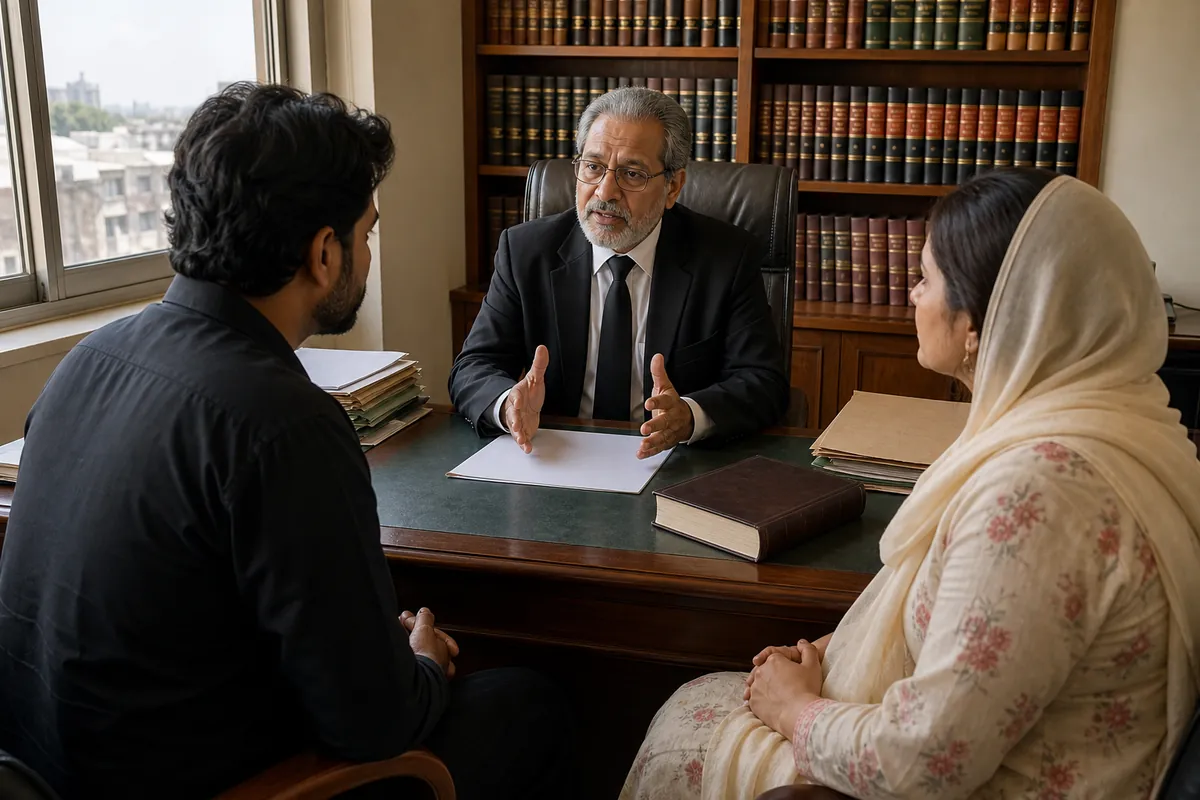
Executive Summary: The Role of Family Lawyers at a Glance
What This Guide Covers
This page sets out the role of family lawyers at every stage of a Pakistani family matter: initial advice, Union Council proceedings, drafting, reconciliation, evidence, execution and appeals. It also explains the limits on what an advocate may lawfully do and the professional duties every client is entitled to expect. It is written for clients, so the role of family lawyers is described in plain language.
Who Needs a Family Advocate
Spouses facing talaq, khula or a dispute over dower, maintenance, dowry articles or custody usually benefit from advice early. Understanding the role of family lawyers also helps overseas Pakistanis, grandparents seeking guardianship and anyone who has received a notice or a summons from a Family Court.
How Fees Are Quoted
Because the role of family lawyers differs at each stage, fees are quoted after the documents are reviewed; the work depends on the stage, the city and whether the other side contests. The basis for the first meeting is explained on our consultation fees page, and a written quote follows once the file has been read.
Usual Time Frames
A talaq notice runs for 90 days at the Union Council. Contested Family Court cases commonly take several months and sometimes longer, depending on service, adjournments and evidence. No advocate can guarantee a timeline, and the role of family lawyers includes telling you honestly where delay is likely.
How to Start
Send a short WhatsApp message to +92 333 1127834 describing the problem, with photographs of the Nikah Nama, any notice received and CNIC copies. An advocate reviews them, explains the role of family lawyers in your situation and confirms whether a meeting in Karachi or Lahore, or a call with our Islamabad team, is the right next step.
Advocate-Led Since 1985
Family Lawyers Pakistan is part of Qanoon Group, advocate-led since 1985, with about 17 advocates. Two are Advocates Supreme Court: Syed Akhtar Rizvi in Karachi and Fiaz Ahmed Khakh for Islamabad and Lahore. That depth shapes how we understand the role of family lawyers in practice.
Stage One: Advice Before Anything Is Filed
The first and often most valuable part of the role of family lawyers is advice before any step is taken. Many disputes are shaped by what a spouse says, signs or sends in the first few weeks, so careful early advice can prevent mistakes that are hard to undo later in court.
At this stage the advocate reads the Nikah Nama, especially the dower entries and any delegated right of divorce, and identifies which remedy fits: negotiation, a talaq or khula route, a maintenance claim, or a custody application. The advocate also explains the likely cost, the evidence needed and the realistic range of outcomes. Getting this diagnosis right is where the role of family lawyers adds most value.
The Role of Family Lawyers at the Union Council
Not every family matter begins in court. Under the Muslim Family Laws Ordinance 1961, a husband who pronounces talaq must give written notice to the Chairman of the Union Council and send a copy to the wife. The talaq does not take effect until 90 days after the Chairman receives the notice. This is often the first point at which the role of family lawyers becomes formal.
Here the role of family lawyers is practical: drafting a notice that complies with the Ordinance, ensuring it reaches the correct Union Council, attending the Arbitration Council that the Chairman constitutes for reconciliation, and later obtaining the certificate that the talaq has become effective. Our talaq notice in Pakistan guide covers the steps in detail.
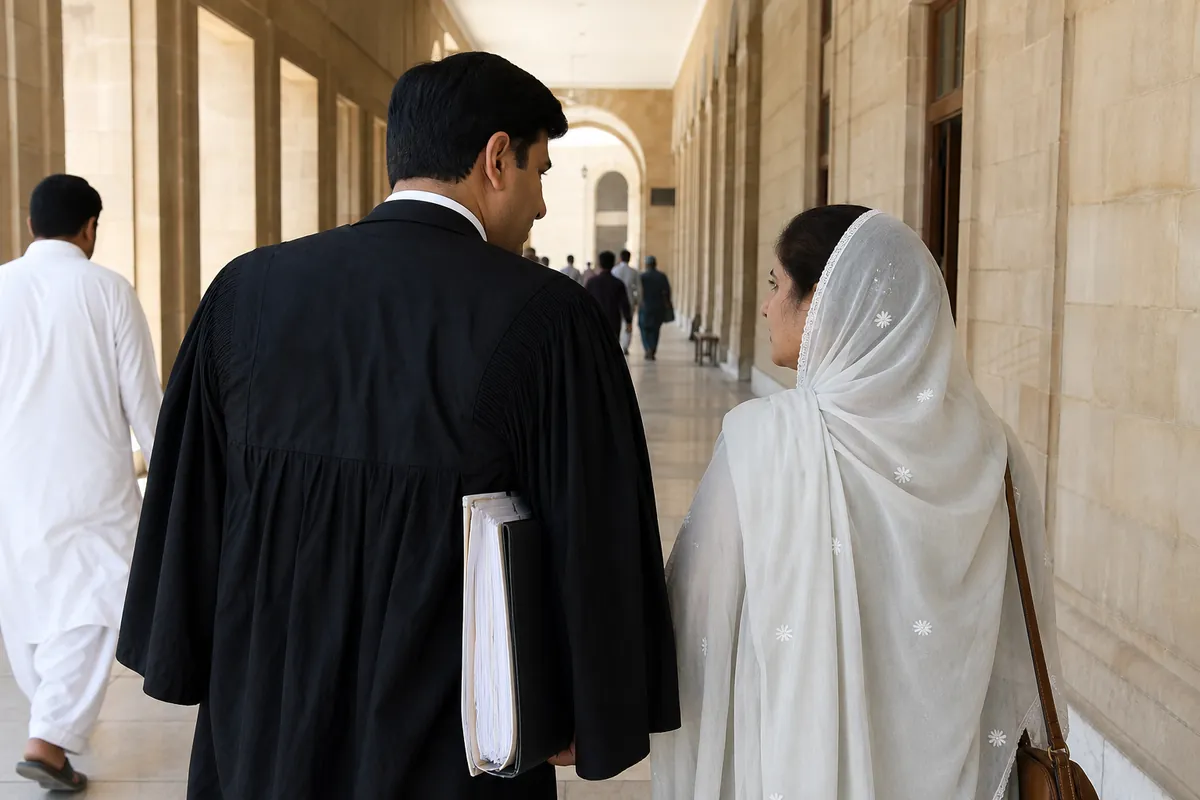
Drafting Pleadings, Applications and Supporting Papers
Where a dispute goes to the Family Court, the plaint is the foundation of the case. The Family Courts Act 1964 requires the plaint to set out the facts and the relief claimed, with a list of witnesses and documents attached. Omissions here can weaken a strong claim for months, which is why the role of family lawyers begins well before filing.
Drafting is therefore a central part of the role of family lawyers. The advocate frames the claims, such as dissolution, dower, maintenance or recovery of dowry articles, pleads them together where the law allows, and prepares interim applications, for example for interim maintenance or for visitation with a child while the main case continues.
Answering a Claim Filed Against You
When you are the defendant, the role of family lawyers shifts to preparing a written statement that answers each allegation, raises any counter-claim permitted by law and attaches the documents you rely on. Filing it on time matters, because a court may proceed against a party who repeatedly fails to appear. Defending a claim is as much a part of the role of family lawyers as bringing one.
Reconciliation and Pre-Trial: Where the Role of Family Lawyers Changes Tone
The Family Courts Act 1964 requires the court to attempt reconciliation at the pre-trial stage, and again before judgment if the first attempt fails. These hearings are not formalities. A settlement reached here can resolve dower, maintenance and custody far faster than a full trial, so the role of family lawyers becomes as much about negotiation as advocacy.
During reconciliation the role of family lawyers is to protect the client while allowing genuine discussion: explaining proposals, recording any compromise accurately and refusing pressure to give up rights. In a khula suit, if reconciliation fails at pre-trial, the court can pass a decree for dissolution without waiting for full evidence. Our khula lawyers in Pakistan page explains that route.
Evidence, Witnesses and Final Arguments
If the case is not settled, the court frames the issues and records evidence. Family Courts follow a simplified procedure, and the formal rules of the Code of Civil Procedure 1908 apply only to a limited extent, but evidence remains the heart of a contested claim. The role of family lawyers at trial is therefore largely about proof.
In this phase the role of family lawyers includes preparing affidavits in evidence, organising documents such as salary slips and school records, examining your witnesses and cross-examining the other side. Final arguments then tie the evidence to the law, including relevant Supreme Court authority where it genuinely applies.
Executing the Decree: The Role of Family Lawyers After Judgment
A decree that is not enforced achieves little. Under the Family Courts Act 1964 decrees are executed by the Family Court itself, which may recover unpaid maintenance or dower through attachment and other coercive measures, including recovery as arrears of land revenue where the law allows. Many clients underestimate the role of family lawyers at this point.
The role of family lawyers continues after judgment: filing the execution petition, tracing the judgment debtor’s salary, property or bank accounts, and pressing for compliance when payments stop. Our guide to execution of family court decrees explains how unpaid amounts are pursued in practice.
Appeals, Revisions and the Higher Courts
An appeal from a Family Court decree lies to the District Court or to the High Court, depending on the presiding judge, and must be filed within the short limitation period the Act fixes. Some decrees, including most decrees of dissolution and certain small claims, are not appealable at all. Knowing these limits is part of the role of family lawyers.
Here the role of family lawyers is to assess honestly whether an appeal has merit, to identify the correct forum and deadline, and to draft grounds that focus on genuine legal error. Where no appeal lies, a constitutional petition to the High Court may occasionally be available, but only in narrow circumstances.
A Stage-by-Stage Table of the Role of Family Lawyers
The table below summarises the role of family lawyers at each stage of a typical matter, together with the main legal basis and what the client usually provides. It is a general guide; every file is assessed on its own documents and facts.
| Stage | What the advocate does | Main legal basis | What you provide |
|---|---|---|---|
| Initial advice | Reads documents, identifies remedy and forum | Muslim Family Laws Ordinance 1961; Family Courts Act 1964 | Nikah Nama, CNIC, notices |
| Union Council | Drafts talaq notice, attends Arbitration Council | Muslim Family Laws Ordinance 1961 | Addresses of both spouses |
| Pleadings | Drafts plaint or written statement and applications | Family Courts Act 1964 | Facts, witnesses, documents |
| Reconciliation | Negotiates and records any compromise | Family Courts Act 1964 | Your instructions on terms |
| Evidence | Prepares affidavits, examines witnesses | Family Courts Act 1964 | Witnesses and records |
| Execution | Files execution petition, traces assets | Family Courts Act 1964 | Details of income or property |
| Appeal | Assesses merit, drafts grounds | Family Courts Act 1964 | Certified copy of decree |
Limits on the Role of Family Lawyers: What an Advocate Cannot Do
Understanding the role of family lawyers also means knowing its limits. An advocate is an officer of the court as well as your representative, and the Bar Council rules of professional conduct place firm boundaries on what may be promised or done on a client’s behalf.
- Guarantee an outcome, a decree amount or a hearing date
- Mislead the court, conceal documents or coach false evidence
- Act for both spouses in the same dispute
- Force the other side, or the court, to agree to reconciliation
- Take decisions to settle or withdraw without your instructions
- Step outside the proper role of family lawyers by contacting a represented opponent directly
Professional Duties Within the Role of Family Lawyers
Every client is entitled to confidentiality, honest advice and loyal representation. These duties sit at the core of the role of family lawyers: your advocate must keep you informed of each hearing, explain orders in plain language, avoid conflicts of interest and return your original documents when the matter ends.
Knowing who handles your file is also part of the role of family lawyers: in our firm the reviewing advocate and the appearing advocate are named at the outset.
Working Well With Your Advocate
The role of family lawyers works best when the client is candid and organised. Share the full history, including anything unhelpful, because surprises in court cause more damage than facts disclosed early. Keep copies of every notice, order and receipt, and tell your advocate promptly about any change of address.
If children are involved, our child custody lawyers in Pakistan page explains the welfare principle that guides the court. For support claims, see our guide to wife maintenance in Pakistan. Both help you prepare focused questions and see the role of family lawyers in your type of case.


Role of Family Lawyers: Frequently Asked Questions
What is the main role of a family lawyer in Pakistan?
The core role of family lawyers is to advise you on your rights, choose the correct forum, prepare and present your case, negotiate where sensible and enforce the result. In practice that runs from the Union Council to the Family Court, execution and, where justified, an appeal. Explaining that role of family lawyers clearly is itself part of good practice.
Do I need a lawyer for a talaq notice?
The law does not require one, but errors in the notice or in serving it can delay the talaq becoming effective. Part of the role of family lawyers is to draft a compliant notice, send it to the correct Union Council and attend the Arbitration Council meetings that follow.
Can a family lawyer guarantee that I will win?
No. Outcomes depend on evidence, the law and the court’s assessment. An honest advocate explains strengths and weaknesses and gives a realistic range. Any promise of a guaranteed result falls outside the proper role of family lawyers and should be treated as a warning sign.
Does the lawyer attend reconciliation meetings?
Yes, where the client wishes. At the Family Court’s pre-trial stage and at the Union Council’s Arbitration Council, the role of family lawyers includes explaining proposals, protecting rights and making sure any agreement is written down accurately before anything is signed. That protective role of family lawyers matters most when emotions run high.
Can one lawyer represent both husband and wife?
No. Where spouses are in dispute their interests conflict, so one advocate cannot act for both. Even in a mutual divorce, each spouse should ideally receive independent advice. Avoiding conflicts is a basic duty within the role of family lawyers under professional conduct rules.
What happens after the Family Court passes a decree?
If the other side does not comply, an execution petition is filed before the same Family Court. The role of family lawyers at this stage includes tracing income and assets, seeking attachment where justified and pressing for regular payment of maintenance.
Can I appeal every Family Court decision?
No. Some decrees, including most decrees of dissolution and certain low-value claims, are not appealable under the Family Courts Act 1964. Assessing whether an appeal lies, and within what time, is an important part of the role of family lawyers after judgment.
How involved will I be in my own case?
You decide the key questions: whether to settle, what terms to accept and whether to appeal. The role of family lawyers is to advise and execute your instructions. You may still need to attend in person for reconciliation or evidence, and the role of family lawyers includes preparing you for that.
Can overseas Pakistanis instruct a family lawyer remotely?
Yes. Advice, document review and much of the preparation can be done by WhatsApp and video call, and a properly attested power of attorney can authorise a representative for many steps. The role of family lawyers for overseas clients includes advising when personal appearance is unavoidable.
How do I start with your firm?
Send a WhatsApp message to +92 333 1127834 with a short summary and photographs of the Nikah Nama and any notices. An advocate explains the role of family lawyers in your particular matter, the documents needed and how fees will be quoted.
Related Legal Services
These pages cover connected questions that often arise alongside role of family lawyers.
Legal Framework Behind Role of Family Lawyers
The explanation above draws on the official framework listed here. Provincial amendments and the facts of each matter must still be checked before acting.
Publication and Legal Review
Reviewed by: Syed Akhtar Rizvi, Advocate Supreme Court.
Published by: Family Lawyers Pakistan, Qanoon Group.
Last updated: .
General guidance. The applicable law, local amendments and case record must be checked for your matter.